877 238 5855





August 14, 2026
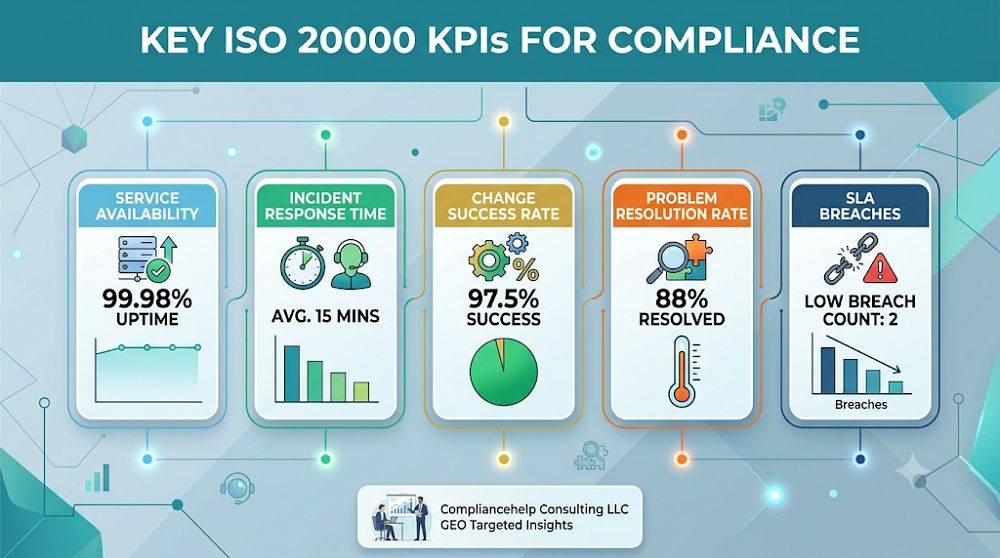
Key ISO 20000 KPIs to Be Aware of For Compliance Needs
Managing IT service delivery effectively requires full visibility into your service management system. Tracking the right ISO 20000 KPIs allows businesses to evaluate performance, improve service quality, and maintain compliance with international standards. ISO 20000 performance measurement focuses on assessing service delivery efficiency, incident response times, and change management outcomes. Establishing clear metrics helps organizations identify workflow gaps and maintain alignment with business goals.
Businesses seeking expert support during standard adoption can partner with Compliancehelp Consulting LLC to implement an effective ISO 20000 performance indicator framework that ensures long-term operational success. Contact us today to learn more, or read on for more information on the major KPIs to be aware of for this vital ISO field.
What You’ll Learn
This blog breaks down essential performance metrics for IT service management compliance:
- Core metrics commonly used to evaluate ISO 20000 implementation success.
- Key operational metrics for service quality, incident handling, and change management.
- How tracking performance metrics supports continuous audit readiness and service delivery.
- Actionable recommendations for selecting and reviewing meaningful performance indicators.
Common Metrics to Evaluate ISO 20000 Implementation
Evaluating standard implementation requires monitoring system performance against predefined objectives. Tracking standard metrics helps organizations verify that service management processes function as intended. Core metrics assess client satisfaction, service availability, and compliance adherence.
Key implementation evaluation metrics include:
- Service Availability Percentage: Measures system uptime against agreed service level agreements (SLAs).
- Customer Satisfaction Score (CSAT): Evaluates user satisfaction through regular service feedback surveys.
- Audit Finding Resolution Rate: Tracks the percentage of internal audit non-conformities resolved within target timelines.
Operational Metrics for Service Quality, Incident Handling, and Change Management
Day-to-day IT service management relies heavily on operational control across incident resolution and system updates. Establishing solid ISO 20000 KPIs in these functional areas ensures reliable service delivery and prevents service disruptions.
The table below outlines fundamental operational metrics across key service management functions:
| Service Area | Performance Metric | Operational Focus |
| Service Quality | SLA Breach Rate | Percentage of service requests failing agreed delivery targets. |
| Incident Handling | First-Contact Resolution Rate | Percentage of incidents resolved during initial user contact. |
| Incident Handling | Mean Time to Restore Service (MTRS) | Average duration required to restore normal service operations. |
| Change Management | Successful Change Rate | Percentage of planned changes deployed without causing incidents. |
| Change Management | Emergency Change Frequency | Number of urgent, unplanned changes required within a reporting period. |
How KPIs Support Compliance Monitoring and Service Improvement
Performance indicators provide objective evidence needed during compliance audits. Auditors require verified data showing that processes are systematically monitored and controlled. Regular metric collection demonstrates proactive management and continuous improvement, which are core requirements of the ISO framework.
In addition to compliance, structured tracking directly elevates service delivery. Performance data highlights bottlenecks, resource shortages, and recurring technical faults. Resolving these root causes reduces service downtime and optimizes team productivity across IT operations.
Recommendations for Selecting and Reviewing Meaningful Indicators
Selecting effective metrics requires strategic focus. Tracking too many indicators can overwhelm teams and dilute attention away from critical business priorities.
Consider the following recommendations when defining performance metrics:
- Align Metrics with Business Goals: Choose indicators that directly reflect customer priorities and organizational objectives.
- Ensure Data Accuracy: Implement automated data collection tools to maintain metric reliability and consistency.
- Set Realistic Targets: Base performance targets on historical performance baselines before raising thresholds.
- Review Performance Regularly: Conduct monthly and quarterly reviews to adapt metrics as business needs evolve.
Frequently Asked Questions
Why are performance metrics necessary for standard certification?
Metrics provide verifiable proof that your organization systematically tracks, evaluates, and improves service delivery processes as required by international compliance standards.
How often should service metrics be reviewed?
Operational teams should monitor key metrics weekly or monthly, while executive management should conduct quarterly strategic reviews.
Can small organizations use simplified metrics?
Yes, smaller teams should focus on a concise set of high-impact metrics covering service uptime, incident resolution, and user satisfaction.
Partnering for ISO 20000 Success
Tracking targeted ISO 20000 KPIs is essential for driving service quality, streamlining incident response, and maintaining standard compliance. Organizations that systematically measure performance build resilient service environments that deliver consistent customer value. Whether operating in major commercial hubs or expanding regionally, adopting a structured evaluation framework ensures long-term operational maturity.
Reach out to Compliancehelp Consulting LLC to streamline your ISO 20000 compliance journey and build a tailored performance monitoring system designed for continuous success.