888 823 5561




August 21, 2026
What Role Does Service Level Management Play in ISO 20000?
Managing information technology services requires a balance between technical capacity and business expectations. Within the framework of an ISO 20000 service management system, service level management provides the structural foundation needed to maintain this balance. It ensures that service providers clearly define, document, monitor, and review all delivery goals with clients.
Without clear agreements, organizations risk misaligned priorities, unexpected operational friction, and low customer satisfaction. If you are preparing for certification or need expert guidance preparing for an ISO 20000 audit, Compliancehelp Consulting LLC offers tailored solutions for your organization. Contact us today to learn more or get started!
Key Info
Explore key insights into implementing service level management effectively within ISO 20000 standards:
- The primary purpose of service level management in the ISO 20000 standard.
- How service agreements align customer expectations with actual performance.
- The direct link between service level monitoring and continual service improvement.
- Best practices for establishing, reviewing, and updating service level commitments.
The Core Purpose of Service Level Management in ISO 20000
The primary purpose of service level management is to establish and maintain formal agreements between the service provider and the customer. ISO 20000 requires organizations to define clear service level agreements (SLAs) for all active services. These agreements act as a baseline for service planning, delivery, and measurement.
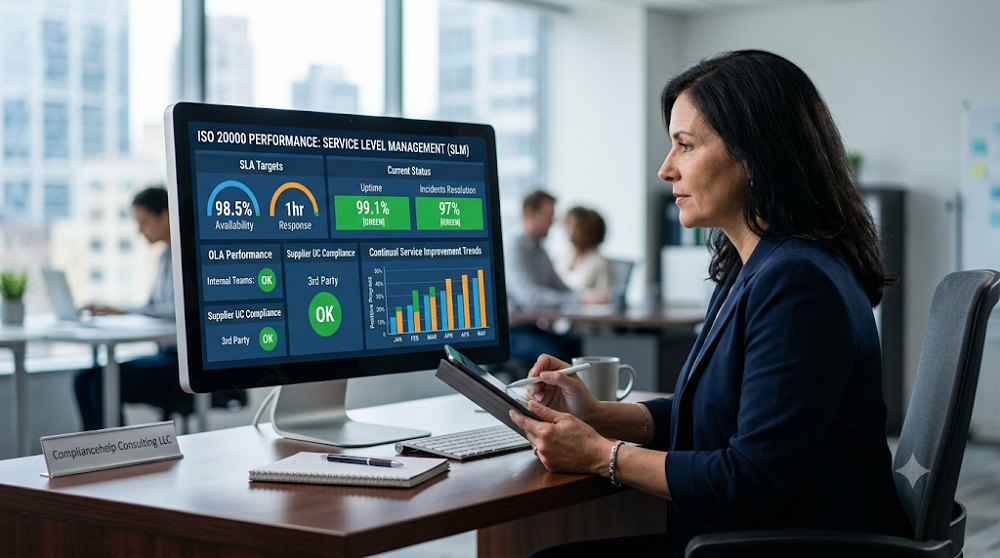
By defining explicit metrics such as system uptime, response times, and resolution targets, service level management eliminates ambiguity. It establishes a shared understanding of operational capabilities and service boundaries. Consequently, both internal teams and external customers work with the same criteria for success.
Connecting Service Agreements, Customer Expectations, and Performance
A frequent challenge in IT service delivery is the gap between customer expectations and realistic capabilities. Service level management directly bridges this gap through structured documentation and routine reviews. Service level agreements translate broad customer expectations into quantifiable targets.
To support external SLAs, organizations must establish supporting agreements internally and with external suppliers. These internal mechanisms ensure operational consistency across all delivery tiers.
| Agreement Type | Primary Audience | Key Objective |
| Service Level Agreement (SLA) | External / Business Clients | Defines overall service commitments, targets, and availability parameters. |
| Operational Level Agreement (OLA) | Internal Delivery Teams | Aligns internal department workflows to support external SLA targets. |
| Underpinning Contract (UC) | Third-Party Suppliers | Enforces vendor accountability to meet underlying service dependencies. |
When actual performance is measured against these structured targets, service providers can identify standard trends and potential gaps before they escalate into major failures.
Driving Continual Service Improvement Through Service Level Management
Effective service level management does not stop at setting initial metrics. It serves as a continuous driver for continual service improvement across the organization. Regular monitoring provides reliable, objective data regarding operational efficiency and service quality.
When service metrics are consistently reviewed, providers can easily identify areas requiring optimization. For example, if a team regularly misses a specific response time target, service level records highlight whether the cause is inadequate staffing, inefficient processes, or outdated technology.
- Data-driven decisions: Objective performance data replaces assumptions during management reviews.
- Proactive risk mitigation: Early trend analysis helps prevent recurring incident patterns.
- Resource optimization: Service metrics show where investment is most needed to improve quality.
Best Practices for Monitoring and Reviewing Service Commitments
Maintaining high service quality requires consistent governance and proactive monitoring practices. Organizations should implement structured review cycles to maintain alignment with changing business requirements.
- Automate metric collection: Use automated tools to track uptime and incident resolution metrics continuously.
- Conduct regular service reviews: Schedule monthly or quarterly performance meetings with key stakeholders to discuss SLA reporting.
- Keep agreements current: Update SLAs whenever business operations, technology stacks, or customer requirements change.
Frequently Asked Questions
What is the main difference between an SLA and an OLA in ISO 20000?
An SLA is an agreement between the service provider and the customer. An OLA is an internal agreement between teams within the service provider organization to ensure SLA commitments are met.
How often should service level agreements be reviewed?
SLAs should be reviewed at least annually or whenever significant changes occur in business operations, technologies, or customer service requirements.
Can an organization achieve ISO 20000 certification without formal service level management?
No. Service level management is a core requirement of ISO 20000. Documented service level agreements and review processes are essential for standard compliance.
A structured approach to service level management enhances service quality, stabilizes operations, and drives customer satisfaction. By maintaining clear agreements and measuring performance, organizations fulfill ISO 20000 standards while building operational resilience.
Whether you need help establishing your service management framework or preparing for an upcoming audit, Compliancehelp Consulting LLC supports organizations with tailored solutions. Contact our consulting team today to streamline your compliance journey.